When a dog guards resources, but won’t actually interact with them
If your dog guards food, toys, or any other high value thing, but won’t eat or play with them, OR shows any signs of stress of resources… this is for you.
By Jenna Romano
Dogs with a lot of anxiety often show confusing signs of stress when given high value toys, treats, or food.
Instead of enjoying the Kong full of peanut butter, they spiral – Whining. Lip licking. Pacing. Guarding.
And the confusing part for their guardians is that these dogs look like they just got handed both a winning lottery ticket and a threat.
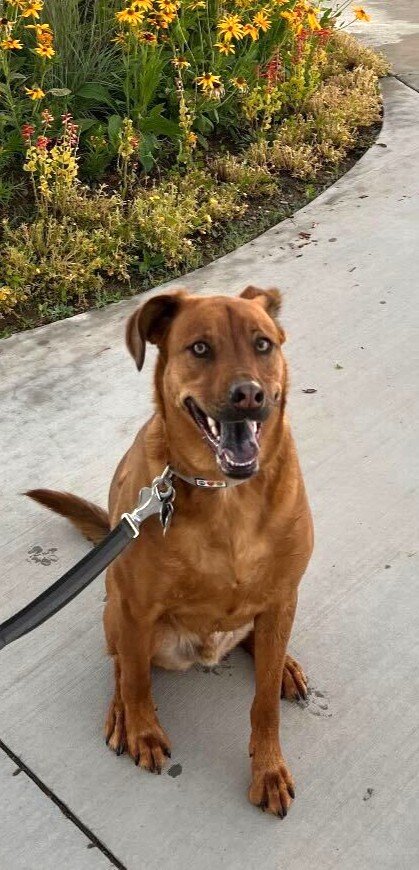
Meet Franklin.
When his guardians gave him a tasty Milkbone or used chicken for treats during training, he’d end up whimpering and crying… sometimes for up to an hour.
If you watch Franklin’s resource guarding behavior around a high value food toy in the video linked at the bottom of this article, you’ll see Franklin’s behavior
isn’t aggressive.
In fact, he looks…like a mother hen (as his guardians put it).
Hovering over on the bone. Protecting. Nesting.
So. Many. Trainers. hear about a case like Franklin’s - hear about the distress, then hear that the stress “goes away” when the high value thing goes away - and they wind up recommending: “Well… just don’t give the Peanut Butter Kong to him.”
Cuz, like, “remove the thing → remove the problem.” #problemsolved 🌈
UMMM… PROBLEM NOT SOLVED
And here’s why…
Quick Disclaimer: Avoiding triggers isn’t always bad. Sometimes it’s the simple, right answer when you’ve already got too many triggers to desensitize your dog to. But we still have to recognize that “just don’t give him the extra smelly Chicken treats” is a band-aid pretending to be a solution.
REASON #1 - THE AVOIDANCE SOLUTION BACKFIRES
When I worked with Frank’s guardians, I explained that just because you remove the Kong full of Peanut Butter doesn’t mean you removed the root of the problem causing the behavior.
If the emotion driving the stress over the high value thing is still there, or if the behavior is so ingrained and habitual, then you could remove one stressful high value thing, and your dog’s just gonna replace it with another high value thing to stress over, and another, and another… You didn’t solve the problem; you just replaced one trigger with another object.
REASON #2 - RESOURCE GUARDING IS… A GOOD THING?
Not giving your dog the high value thing can often rob your dog of healthy enrichment opportunities.
We’ve been conditioned to treat any resource guarding, hiding, or obsessing as something “bad.” Dangerous. Eliminate the behavior. Fix the dog. But this ignores the ethological purpose for guarding and hiding the high value thing.
Dogs don’t just consume resources. They interact with them. Hide them. Shuffle them. Re-find them. Play their own weird little game of, “neener neener, I found it! You didn’t.”
So if you immediately remove the high value thing, remove that opportunity, not only are you not treating the stress, but you may also be removing necessary enrichment.
YOUR NEXT STEPS…
If yourdog guards food, toys, or any other high value thing, but won’t eat or play with the thing,or if you suspect your dog shows signs of stress around food, food toys, and other dog resources…
the big question you gotta ask yourself is: Should you take your dog’s resource away if it causes stress, or is the activity providing your dog so much essential enrichment that the benefit outweighs the cost?
⬇️For a deep dive so you can answer for yourself, watch my training session with Franklin’s guardians
In this video, you’ll learn:
How to determine if the dog's stress is interfering with enrichment and/or training sessions
Difference between aggressive resource guarding vs dog overwhelm-based guarding
Actionable steps on how to train a dog who guards by changing the value and context of the resource
Franklin & his Guardians are graduates of the Recovering Rover Program for Dog Anxiety.
RRP is my signature rehab program designed for dogs struggling with reactivity/aggression, generalized anxiety, and chronic stress-based behaviors. It’s focused on treating your dog’s emotional experience, not just managing symptoms. No punishment. No guesswork. Just clear, strategic curriculum and coaching that actually holds up in real life.
Watch/Listen Jeanette, Ian, and Franklin’s recovery journey and about their experience in the RRP here.
More Resources to Help a Stressed Dog Who Won’t Eat
🎥 How To Train An Anxious Dog Who Won't Eat Treats
If your dog is no longer eating treats on walks, in public, or any other stressful situation, this can be a HUGE RED FLAG that your dog is anxious. It means there is a trigger in the environment that is causing your dog anxiety. In this video, I explain 4 dog training strategies to help you better understand what is triggering your dog and how to reduce your dog’s anxiety.
📝 List of 50 Enrichment Ideas to do with your dog
Easy, realistic ways to meet your dog’s mental and emotional needs — without buying a bunch of gear, adding hours to your day, or wondering if you’re “doing enough.”